
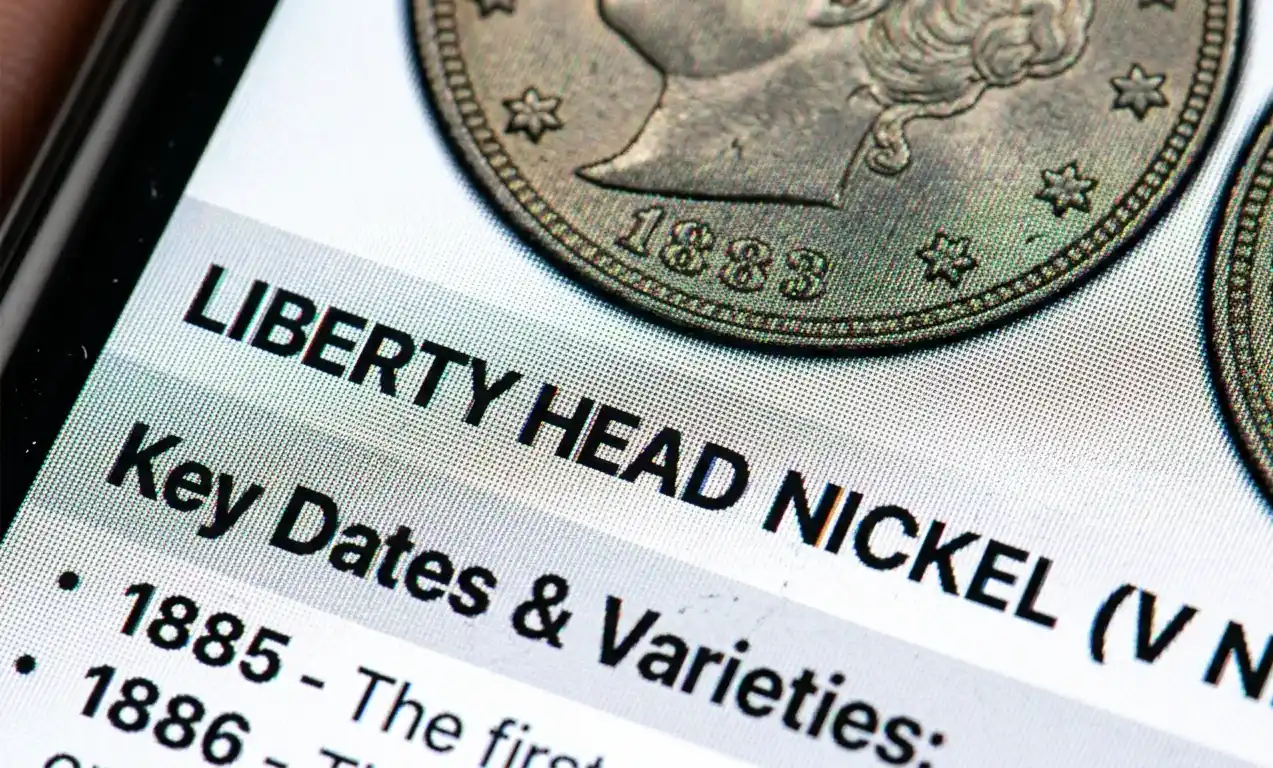
Collectors increasingly rely on software such as Coin ID Scanner, CoinScope, and similar services avoiding pricing mistakes and counterfeit purchases.
Modern mobile coin collector software changes traditional methods of physical asset evaluation.
Digital tools provide high accuracy in rare metal analysis.
Using mobile scanners eliminates the necessity of constant consultations with professional experts.
Every smartphone owner gains access to global databases within seconds.
Automated Coin Recognition
Mobile assistants utilize complex computer vision algorithms.
The camera of a mobile device captures minute elements of the relief.
The software compares the obtained images with reference samples.
Optical Matching Algorithm
Scanning the surface reveals deviations in the placement of letters and numbers.
Identification occurs by comparing control points of the image.
Applications immediately determine the mint mark by analyzing small letter designations.
Databases of Collectible Assets
Integrated catalogs receive updates in real time.
Programs synchronize with platforms of major auction houses.
The user receives actual information regarding the sales of identical lots.
Preventing Critical Financial Errors During Transactions
Buying rare coins involves high financial risk.
Inexperienced buyers often make transactions without preliminary authenticity checks.
Utilizing a scanner minimizes the probability of purchasing copies.
Verification via Stolen Item Registries
Large services contain registers of stolen collectible items.
Checking the serial number of a certification holder protects against purchasing criminal goods.
Information systems store records of blocked plastic slabs.
Detection of Crude Imitations
Simple counterfeits are recognized at the stage of visual analysis by the camera.
Inconsistencies in the font style compared to the original minting trigger a system warning.
The program points to untypical surface elements of the scanned coin.
Specific Minting Errors and Their Digital Evaluation
Errors of mints increase the coin values.
Digital catalogs contain detailed descriptions of known defects.
Double Die Error
A double blow of the die creates a pronounced doubling of design elements.
The shift of legend letters is easily detected upon magnifying the image.
Scaling tools help to examine defects without using physical magnifying glasses.
Off Center Error
Displacement of the planchet during minting leads to the loss of a design part.
The value depends on the percentage of design displacement relative to the center.
Applications allow calculating the exact proportion of the remaining relief.
Repunched Mintmark Error
Repeated stamping of the mint mark occurs on old United States cents.
This detail significantly increases the market value of an ordinary specimen.
Identification programs contain macro photographs of original marks for verification.
Correlation Between Verification and Financial Results
Performing a timely test guarantees the preservation of monetary funds.
Below is the sequence of actions when evaluating a doubtful item.
Applying a digital scanner → Instant recognition of defects → Excluding the purchase of a counterfeit
Lacking protective systems → Purchasing a copper-coated copy → Financial damage
Utilizing an actual database → Comparing market indicators → Eliminating overpayments to the seller
Functional Comparison of Popular Digital Tools
The choice of software depends on the specific tasks of the collector.
Different applications offer distinct sets of tools for scanning coins.
Below is a comparison table of key software products.
Application Name | Recognition Accuracy | Database Size | Additional Features |
Coin ID Scanner | 92% | Over 150,000 coins | Auction search |
CoinScope | 89% | Over 120,000 coins | Fast scanning |
Coinoscope | 91% | Over 140,000 coins | Grade estimation |
Each application utilizes its own image processing algorithms.
Using several systems is recommended for increasing verification accuracy.
Practical Application of Mobile Programs During Coin Evaluation
The process of coin analysis consists of several consecutive steps.
The collector must ensure high-quality lighting before starting the photography.
Shadows on the coin surface can distort the results of automatic recognition.
Preparing for Scanning
The coin should be placed on a monochrome contrasting background.
Using a white or black sheet of paper simplifies camera focusing.
Smartphone lens must be held parallel to the coin plane.
Image Capture Process
Camera takes an automatic picture upon reaching the required sharpness level.
Program instantly crops the unnecessary background along the coin contour.
The process of sending the image to a remote server for analysis begins.
Receiving Analysis Results
System outputs the most probable matching options within a few seconds.
The user verifies the minting date and the mint mark on the screen.
An application displays the approximate market value for different grades.
Limitations of Modern Mobile Scanners
Digital tools are not an absolute replacement for professional expertise.
Sophisticated high-quality counterfeits cannot be detected solely by photographs.
Problem of Accurate Weight Determination
The phone camera is incapable of weighing a physical object.
The difference between a gold coin and a gold-plated copy often lies in the mass.
Programs can only provide reference information regarding the correct weight.
Difficulties of Grade Estimation
Determining the exact grade of a coin requires studying the surface under a coin finder app.
Microscopic scratches on the coin field lower the final grade.
Applications give only an approximate estimation of preservation based on photographs.
Importance of Professional Certification
Confirming the authenticity of valuable specimens requires official expertise.
Leading independent companies conduct detailed physical analysis of coins.
Certification guarantees compliance with the declared characteristics.
Professional Certification Organizations
Professional certification by PCGS is a reliability standard in the United States market.
Professional certification by NGC provides international recognition of coin quality.
Certificates of these companies are entered into unified electronic databases.
Advantages of Certified Coins
Packaging the coin in a special plastic slab protects the metal from damage.
An individual barcode simplifies authenticity verification through mobile applications.
Buyers pay the maximum value for certified specimens.
Integration of Digital Technologies Into the Modern Market
The development of mobile software changes the structure of retail numismatic sales.
Sellers at flea markets can no longer conceal the true value of items.
Buyers quickly verify information directly at sales counters.
Increased Transaction Transparency
The availability of pricing information reduces the margin of dishonest dealers.
Market prices become uniform across different regions of a single country.
Application users can argue during bargaining based on auction statistics.
Expanding the Geography of Coin Searches
Digital platforms allow purchasing coins anywhere in the world.
Mobile catalogs help to identify foreign coins featuring complex writing systems.
Collectors easily recognize Arabic or Asian coins using photographs.
Perspectives of Numismatic Software Development
Image recognition technologies continue to improve with every passing year.
Developers implement new analysis methods for increasing application accuracy.
Using Artificial Intelligence
Neural networks train on millions of images of various coins.
The accuracy of detecting small die varieties increases constantly.
Artificial intelligence will estimate the wear of the coin field more precisely.
Developing Spectral Analysis via Camera
Future technologies will allow conducting basic chemical analysis of alloys.
Special filters will help to determine metal composition by light reflection.
These advancements will make mobile applications even more valuable tools.